This specific lamppost, the Type B, dates to around 1910 and was designed for New York City Parks by Henry Bacon, best known as the architect of the Lincoln Memorial.
Central Park was envisioned as a ruse in Urbay, a rural escape from city life, so designers Olmsted and Vaux originally included no lighting at all. In fact, the park was generally closed after dark.
The introduction of the Type B lamppost helped change that, making nighttime use of Central Park possible.
Each post features a cast-iron pole and a distinctive wrought-iron shield around the globe. The light is intentionally soft and warm, meant to feel more like a lantern than a street lamp, so the park feels pastoral, not urban.
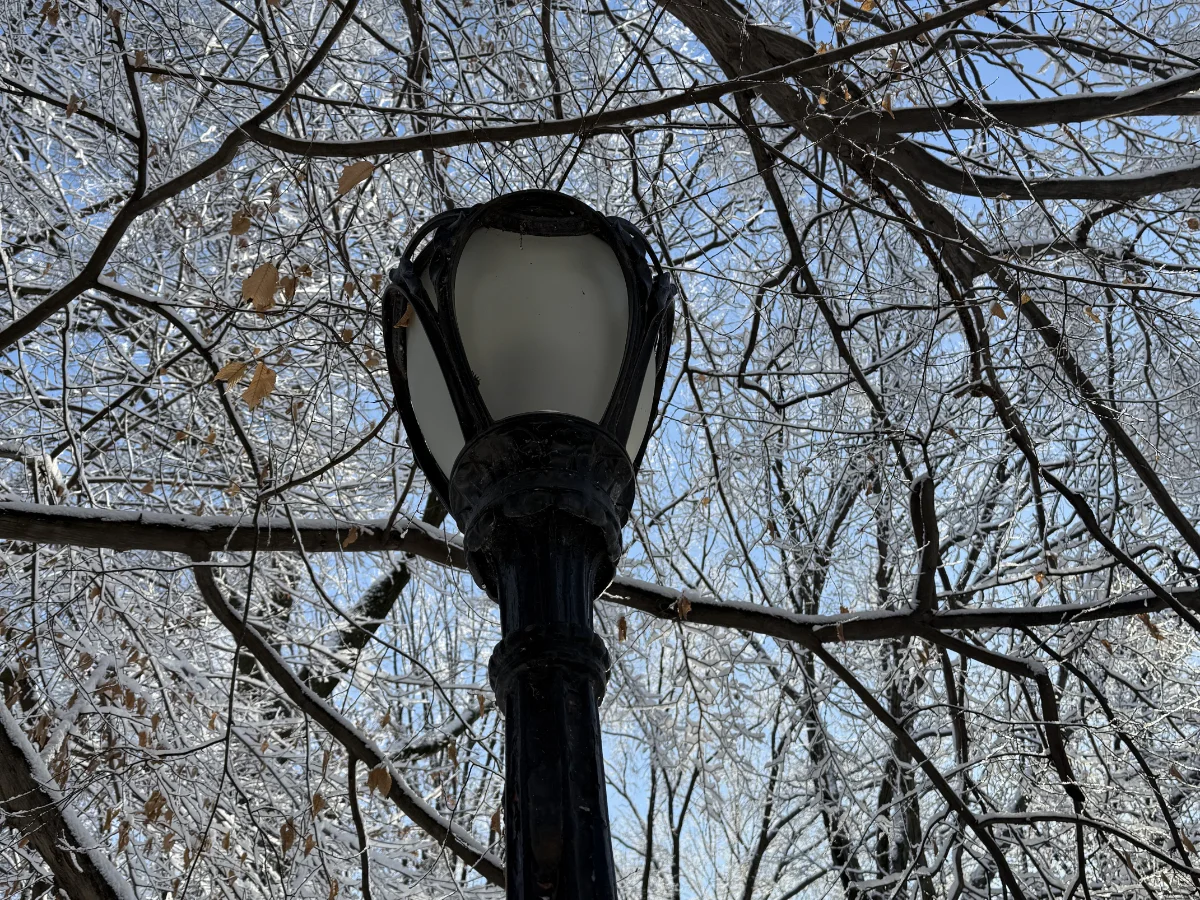
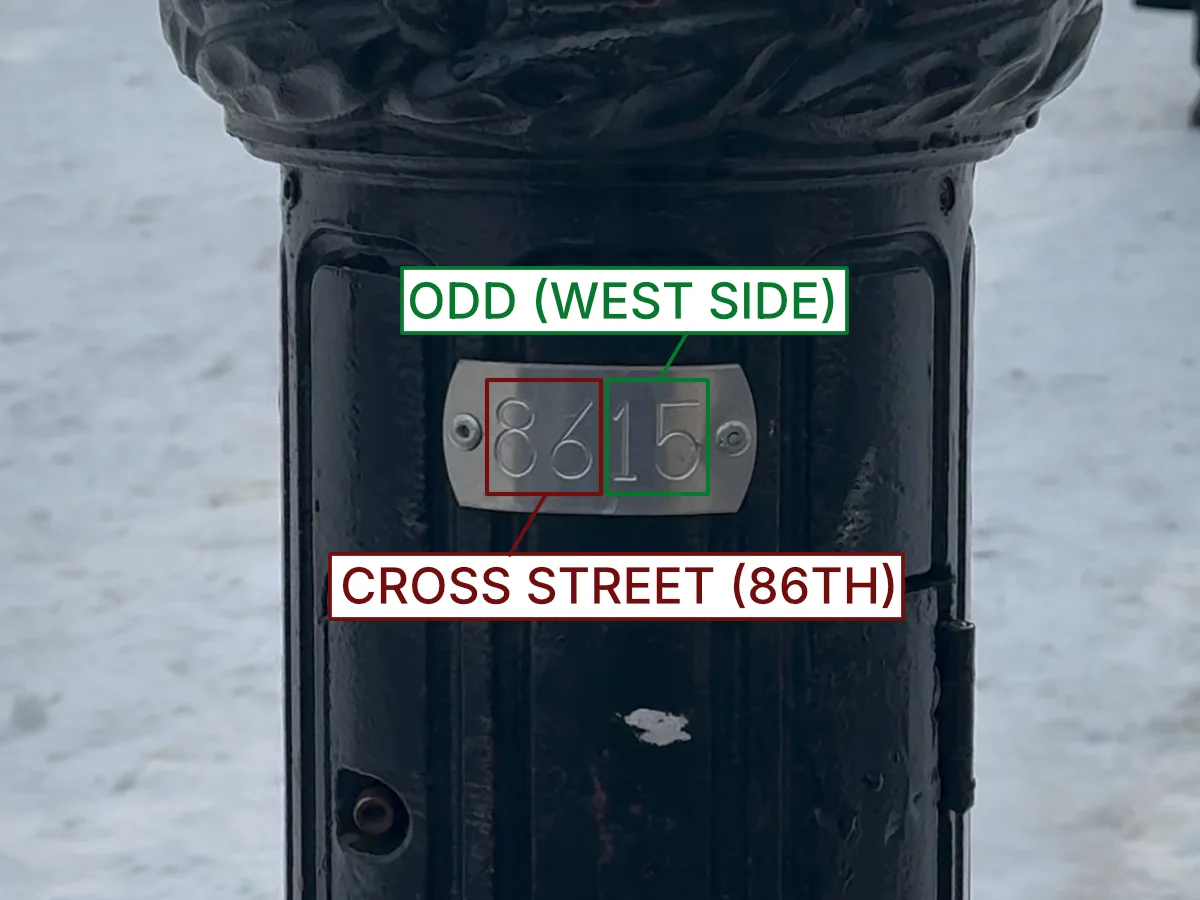
Today, there are over 1,800 of them, and they do more than just light the way. Look closely at the base. The numbers tell you the nearest cross street and whether you’re on the west side or the east side. If the final number is odd, you’re on the west side, and if it’s even you’re on the east side. Excluding the final number, you’ll see your closest cross street, which is usually the first two numbers (although it can be three numbers in the northern reaches of the park).
So if you ever feel lost in the park’s 843 acres, find a lamppost and let it shed a little light on the situation.