You’ll see one of these glowing orbs pretty much any time you exit one of New York City’s many subway stations.
Originally, these globes were simple frosted glass lights, intended solely to provide illumination. Then, in the 1980s, they were assigned a special color-coded scheme.
To understand why they needed color at all, it helps to picture what the subway was like back then. At that point, you still have to buy a subway token from a physical human sitting inside a booth.
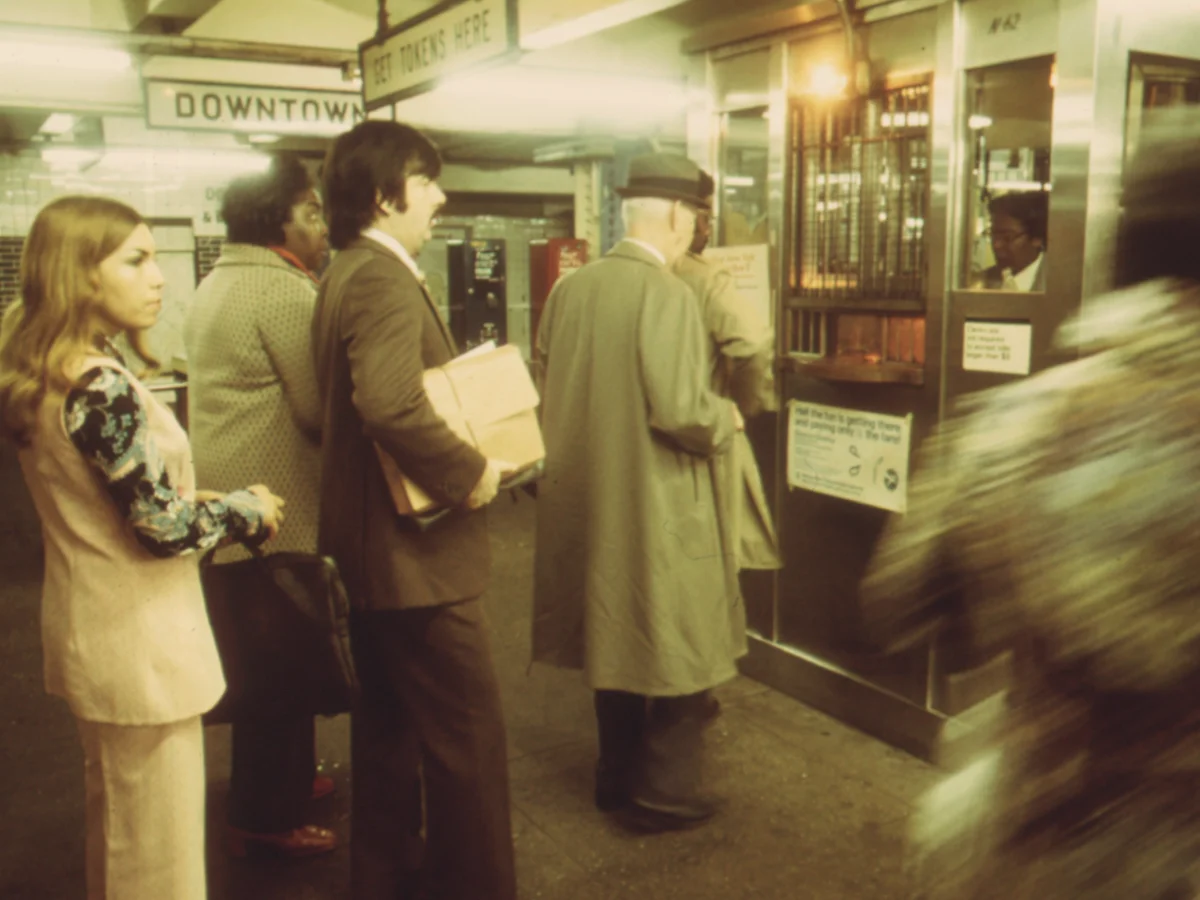
But not every station entrance had a booth or someone waiting inside it. So the MTA needed a way to indicate which entrances were staffed, especially at night.
They did this by color-coding the existing globes with three designations: green indicated an entrance with a 24-hour token booth, which you could use at any time; yellow meant a part-time booth, which you could still use if you had a token already; and finally red meant no booth at all.
Then, in the 90s, they changed the globes again. This time, to make them into the so-called half moons. They left the top half with their original color, but made the bottom half into a frosted white. This only confused their meaning more.
The NYTimes quoted one man in 2002, confidently, but incorrectly, declaring that “green means always open, red means always closed, half-green means open most of the time and half-red means closed most of the time.”
But no, the MTA’s goal in creating the half moons was simply to have them function better as lamps.
Ultimately, the MetroCard, and later OMNY, allowed most station entrances to remain open without staffing. The yellow globe was quietly phased out, and the green globe became most of what you see today.
That left the red globe with a muddled purpose.
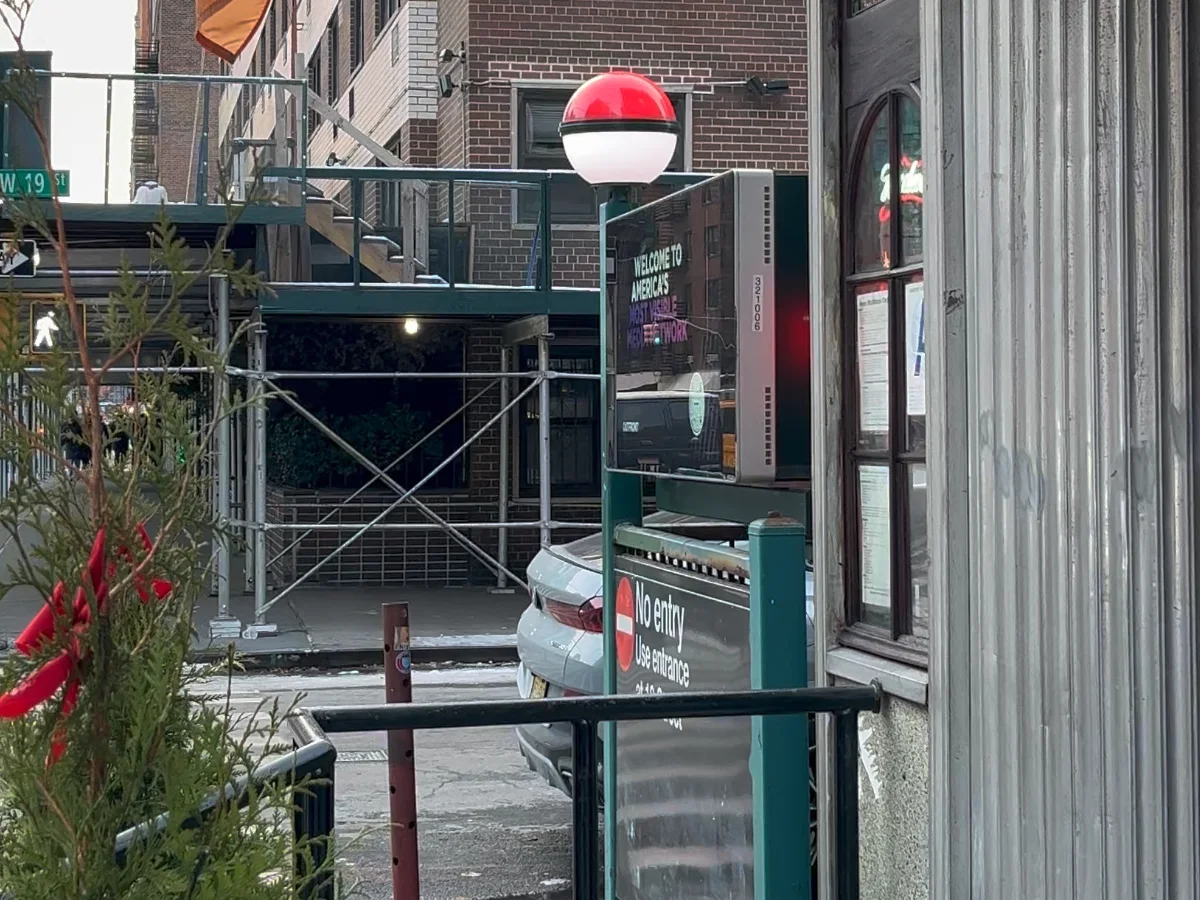
It can indicate, like this staircase at the 18th Street station, that this particular entrance is exit only.
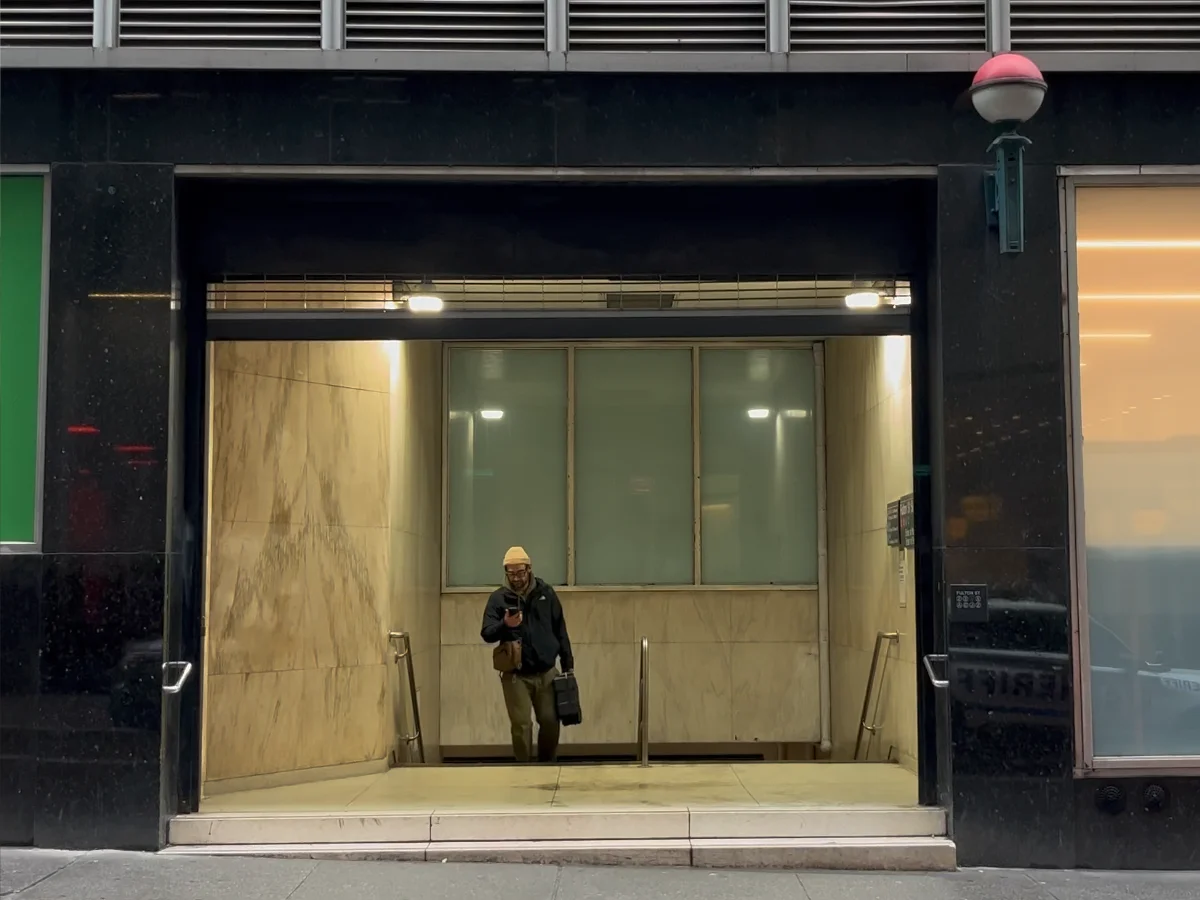
But it can also indicate, like at this entrance to the Fulton Street station, that the entrance is privately owned and closes at night.
Ultimately, I wouldn’t necessarily rely too heavily on their meaning. But the subway globes do stand as an example of an attempt to build information directly into the city’s streetscape. And even if the symbolism of the color has largely been forgotten, the green globe still signals one thing clearly: you’re at the subway.