With all the steam pouring out of the street, you might think New York City sits above a Yellowstone-style supervolcano. But no, this steam is 100% man-made, part of New York’s nearly 150-year-old steam system.
From there, it’s piped underground throughout Manhattan, used to heat, and perhaps surprisingly, to cool, more than 1,500 buildings.
But a system this old is bound to have issues.
Water is the main enemy of the steam pipe. After it rains, the ground can become saturated with cool rainwater. This can cause the pipes themselves to cool down, and if the pipes cool down enough, the steam inside will turn back into water. Usually this is not a major issue, and there are systems in place to handle the water.
Sometimes, however, it can become catastrophic. If enough water cools, pockets of water can slam into each other, creating a water hammer. This impact can sometimes create a shockwave powerful enough to rupture the pipe.
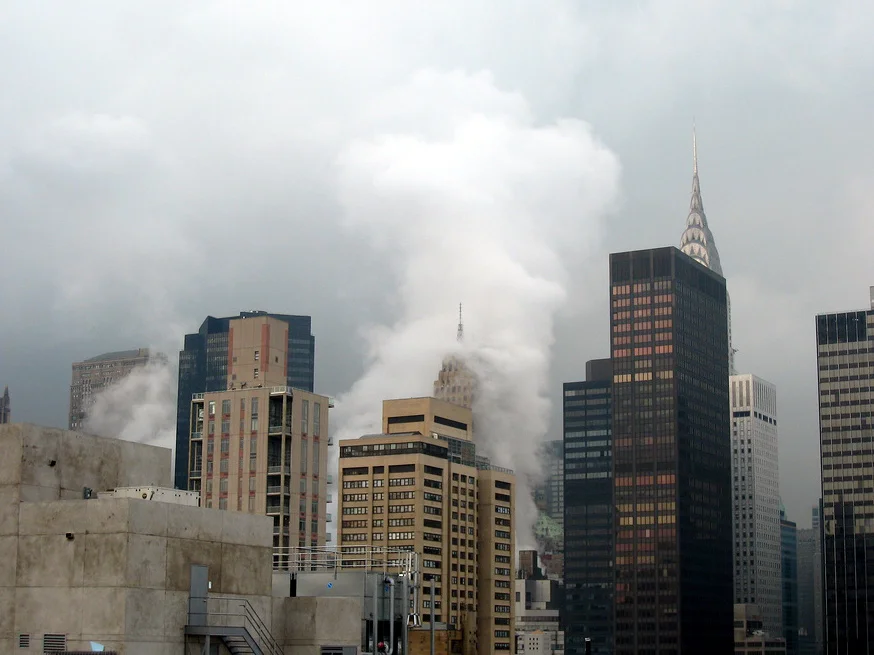
And that’s exactly what happened in 2007, just outside Grand Central Terminal, at 6:00 p.m., in the middle of rush hour. A pipe exploded, blasting a geyser of asbestos-filled debris in the air and leaving behind a crater 35 feet wide.
Catastrophic failures like that are rare, but even routine maintenance can be dangerous when the steam inside these pipes is heated to over 400 degrees.
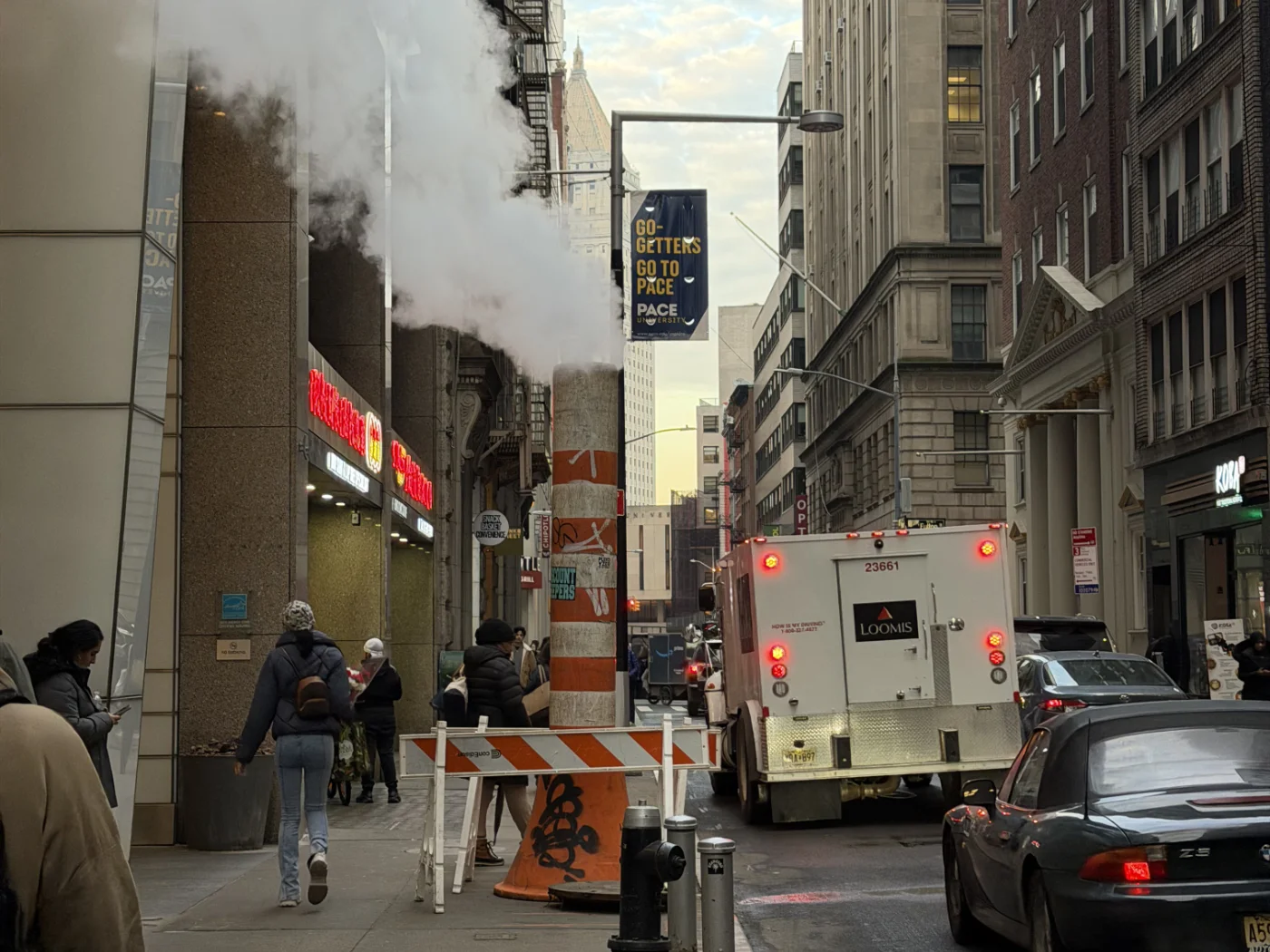
That’s where these orange funnels come in. They safely vent the steam upward, giving it space to cool and keeping it away from pedestrians below.
They’ve become so ubiquitous that they’re practically shorthand for “This is New York” in movies and TV.
And they’re not likely to disappear anytime soon. As buildings look to move away from oil and on-site boilers, Connessen has identified roughly 1,000 more buildings that could switch to steam.
So what do you think? Does seeing all that steam make you nervous? Or does it signify that you’re right here in the big city?